
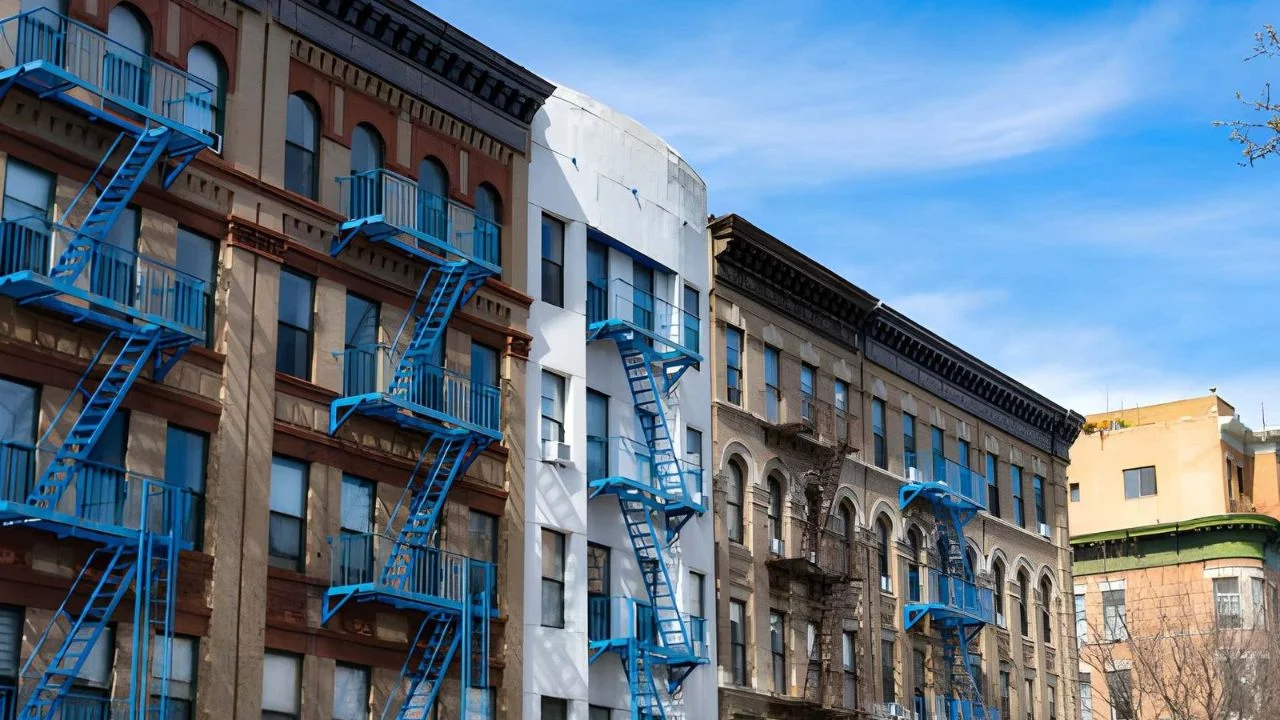
Protect aging steel structures in Jersey City, Newark, Hoboken, Paterson, Elizabeth, and surrounding areas with professional rust prevention and protective coating solutions. Get a free assessment from our restoration team.
Older North Jersey Buildings Need More Than a Fresh Coat of Paint
Many pre-1978 properties have multiple layers of aging coatings. We follow proper preparation and lead-safe practices when removing failing paint, rust scale, and corrosion buildup.
We specialize in helping commercial property owners and multi-family landlords navigate the strict New Jersey DCA (Department of Community Affairs) 5-Year Fire Escape Inspection Cycle (NJAC 5:10-27.1). Our protective coating services are specifically engineered to satisfy municipal structural housing inspectors. We coordinate with licensed NJ Professional Engineers whenever structural certification is required.
Rust usually starts where moisture reaches exposed steel around joints, welds, fasteners, and damaged paint. By the time bubbling paint appears, corrosion may already be spreading underneath the coating.
A quality coating system creates a protective barrier. The National Association of Corrosion Engineers (now AMPP) has long recognized corrosion control as a critical part of extending the service life of steel assets.
The New Jersey Infrastructure Toll
Buildings along the Hudson River Waterfront (including Exchange Place in Jersey City and the historic blocks of Hoboken) face rapid iron oxide acceleration due to brackish salt-water air and high-velocity winds.
Conversely, properties bordering the I-95/NJ Turnpike industrial corridor in Newark and Elizabeth contend with dense chemical emissions and heavy traffic particulates. These localized pollutants create an acidic film on exterior steel, causing sub-film corrosion that eats away at structural connection bolts long before rust bubbles through the topcoat.
We examine visible corrosion, peeling coatings, connection points, bolts, rails, platforms, and support areas to determine whether the structure needs coating work or additional repairs first.
Because a vast majority of multi-family buildings in Hudson, Essex, and Passaic counties were built before 1978, we strictly adhere to NJ Division of Codes and Standards Lead-Safe work practices.
We apply corrosion-resistant primers designed to bond with prepared steel and create a protective foundation against future rust development. Primers provide chemical adhesion between cleaned steel and the finish coat.
After completion, we review the finished work, check coverage, and provide documentation outlining the completed maintenance.
A durable exterior-grade metal coating is applied to withstand moisture, seasonal temperature changes, and everyday environmental exposure.
The right coating system depends on the building environment. Properties near waterfront areas such as Jersey City and Hoboken face different corrosion challenges than inland buildings.
We don't use standard retail paint. Our systems are built using commercial-grade, industrial-spec products like Benjamin Moore Corotech rust-inhibitive epoxy primers and Sherwin-Williams Pro Industrial DTM (Direct-To-Metal) aliphatic urethanes. For waterfront properties, we specify zinc-rich primers that act as a sacrificial anode, actively preventing moisture from creeping beneath the film even if the topcoat is scratched.
For Older Buildings, Lead-Safe Preparation Matters
Many New Jersey multi-family and commercial properties were constructed before 1978 and may contain layers of aging paint coatings. Before disturbing existing coatings, we evaluate the condition of the surface and follow applicable lead-safe work practices for covered projects.
When EPA Renovation, Repair and Painting (RRP) requirements apply, our preparation process includes proper containment, dust-control methods, and cleanup procedures designed to protect occupants, workers, and property managers from unnecessary exposure.

Addressing these issues early helps prevent corrosion from spreading into areas that require welding or structural repair. Common warning signs include:
Restore Your Fire Escape Before Corrosion Becomes a Bigger Expense
From Jersey City waterfront properties to Newark commercial buildings, we provide coating solutions designed around your structure’s environment, condition, and maintenance history.
| Condition | Fire Escape Painting | Fire Escape Repair |
| Best For | Surface rust, peeling paint, faded coatings, minor corrosion | Structural damage, cracked welds, loose connections, deteriorated steel |
| Purpose | Protect steel from moisture and corrosion while extending coating life | Restore structural integrity and bring the fire escape back to safe operating condition |
| Common Signs | Flaking paint, light rust staining, weathered finish, exposed metal | Bent members, severe rust loss, unstable railings, damaged stairs or platforms |
| Work Performed | Surface preparation, rust removal, primer application, protective coating system | Steel replacement, welding, connection repairs, component replacement, structural restoration |
| When It’s Needed | The fire escape is structurally sound but needs corrosion protection | The fire escape has safety issues or structural deterioration that painting alone cannot fix |
| Long-Term Benefit | Slows corrosion, improves appearance, extends service life | Restores safety, code compliance, and structural performance |
| If Inspection Finds… | Painting proceeds after proper surface preparation. ASTM D610 rust evaluation | Repairs are completed first, followed by painting if needed for long-term protection |
Pricing depends on size, height, condition, accessibility, and required preparation. We provide a project-specific estimate after reviewing your structure.
No. Coating protects healthy steel but does not repair structural deterioration. Damaged areas must be addressed before final coating.
In New Jersey, routine cosmetic painting does not require a structural permit. However, if our pre-inspection reveals that rust has compromised more than 10% of a structural element such as severely pitted connection brackets, heavily corroded drop ladders, or failing anchor bolts, welding or metal replacement is legally required. These structural modifications require a local municipal building permit and must be signed off by a licensed New Jersey Structural Engineer before final coating can begin.
Most projects range from a few days to longer depending on size, weather, preparation requirements, and building access.
You are typically given a strict 30-to-60-day window to remediate the violation. We expedite assessments for property managers facing state or municipal citations. Our team coordinates directly with your structural engineers to ensure the scraping, priming, and industrial coating are documented correctly, providing you with a clean paper trail to clear the violation with local code enforcement.
