
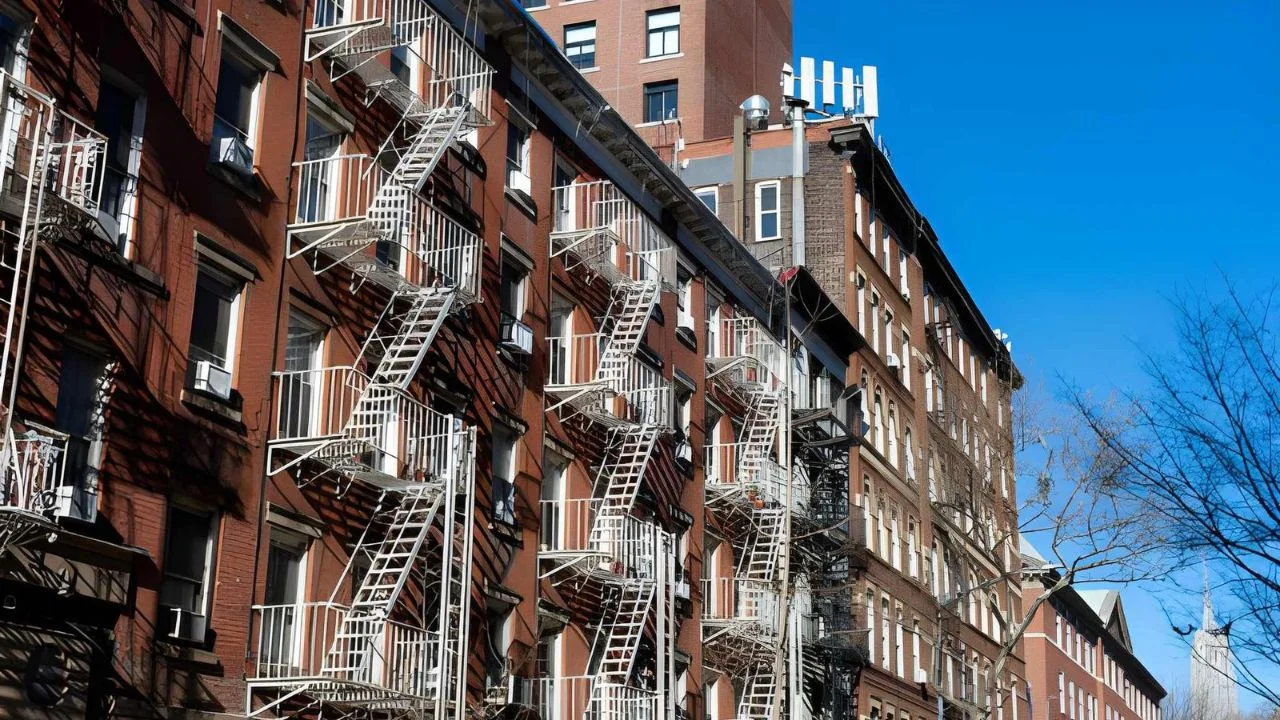
Renew a structurally sound but worn exterior egress structure without a full rebuild. We secure hardware, replace worn components, treat localized corrosion, and refresh protective coatings while preserving serviceable steel.
Good renewal starts with condition. We examine connections, treads, railings, fasteners, and coatings to determine whether wear is superficial or evidence of deeper steel loss.
Depending on the assessment, work may include:
Coating is never a substitute for structural assessment. Older painted steel also deserves attention before preparation.
EPA’s Renovation, Repair and Painting rule can apply to paid work that disturbs regulated painted surfaces in qualifying pre-1978 housing and child-occupied facilities. Covered firms must be certified and use lead-safe work practices. OSHA’s construction lead standard, 29 CFR 1926.62, applies where workers may be exposed to lead.
These services describe different levels of intervention.
The scope should follow the actual condition: retain sound steel where appropriate, but do not disguise structural deterioration with cosmetic work. According to the NJ DCA Bureau of Housing Inspection (BHI) enforcement guidelines, failing to remediate an unsafe exterior exit facility within the standard 30-to-60-day correction window can result in statutory penalties starting at $500 to $5,000 per violation, which can compound daily if left ignored.
We review visible steel, connections, treads, railings, fasteners, and coating conditions. Significant deterioration is documented before the scope is set.
Loose fasteners, worn connections, damaged walking surfaces, and weakened railing components are identified for adjustment, replacement, or further review.
Serviceable components are retained where appropriate. Damaged parts are replaced with compatible components. Structural welding is used only when justified by condition and scope.
The finished work is checked for component condition, coating coverage, workmanship, and obvious safety concerns. Conditions beyond scope are reported rather than concealed.
Loose corrosion and failed coatings are removed before the selected protective system is applied according to product requirements.
Under the NJ DCA’s Formal Technical Opinion 3 (FTO-3), local code officials strictly enforce that refurbishment cannot involve any structural modifications unless an engineered load test or professional certification is provided. We design our refurbishment scopes to stay precisely within the legally defined bounds of ‘ordinary maintenance’ to save you from bureaucratic delays, while completely satisfying the safety mandates of N.J.A.C. 5:23-2.7.
A renewal project may make sense when:
The 8 – 10 year point is a practical indicator, not a statutory deadline. Actual service life depends on exposure, drainage, coating quality, connections, and corrosion control.

For landlords and property managers, renewal can be a practical middle ground between upkeep and a major capital project. Addressing worn hardware and minor deterioration can preserve serviceable assemblies.
For a portfolio, document condition by address, separate cosmetic work from structural defects, prioritize urgent issues, and retain completion records.
The “Rivet-Pop” Phenomenon
On historic NJ structures built before World War II, fire escapes were assembled using hot iron rivets, not modern bolts. When rust forms between two sandwiched iron plates (known as ‘pack rust’), it exerts up to 10,000 PSI of mechanical pressure. This pressure will literally pop the heads right off historic rivets. A true insider refurbishment doesn’t just weld over these; we carefully ream out the failed rivet hole and install an ASTM A325 structural bolt with a hardened washer to properly clamp the joint back together.
We provide services throughout key New Jersey communities, including:
Renewal suits a broadly sound structure with wear. Restoration involves substantial rebuilding for widespread deterioration. If the assembly is functional but dated, renewal is usually the better fit.
Hardware renewal, tread and railing replacement, localized corrosion treatment, refinishing, and minor adjustments.
Repair targets specific damage. Renewal is broader and suits wear affecting several components.
Cost depends on replacement needs and surface preparation. We provide a free on-site or photo-based quote.
It may address inspection-related wear, but significant deterioration can require repair or restoration. Assessment determines the proper scope.
There is no universal schedule. Condition and exposure matter more than a fixed interval; many owners review major services around 8 - 10 years.
Yes, when the underlying assembly remains suitable. It can improve appearance and extend serviceable life without a full rebuild.
Yes. We coordinate projects across multi-building portfolios for landlords and property managers throughout New Jersey.
