
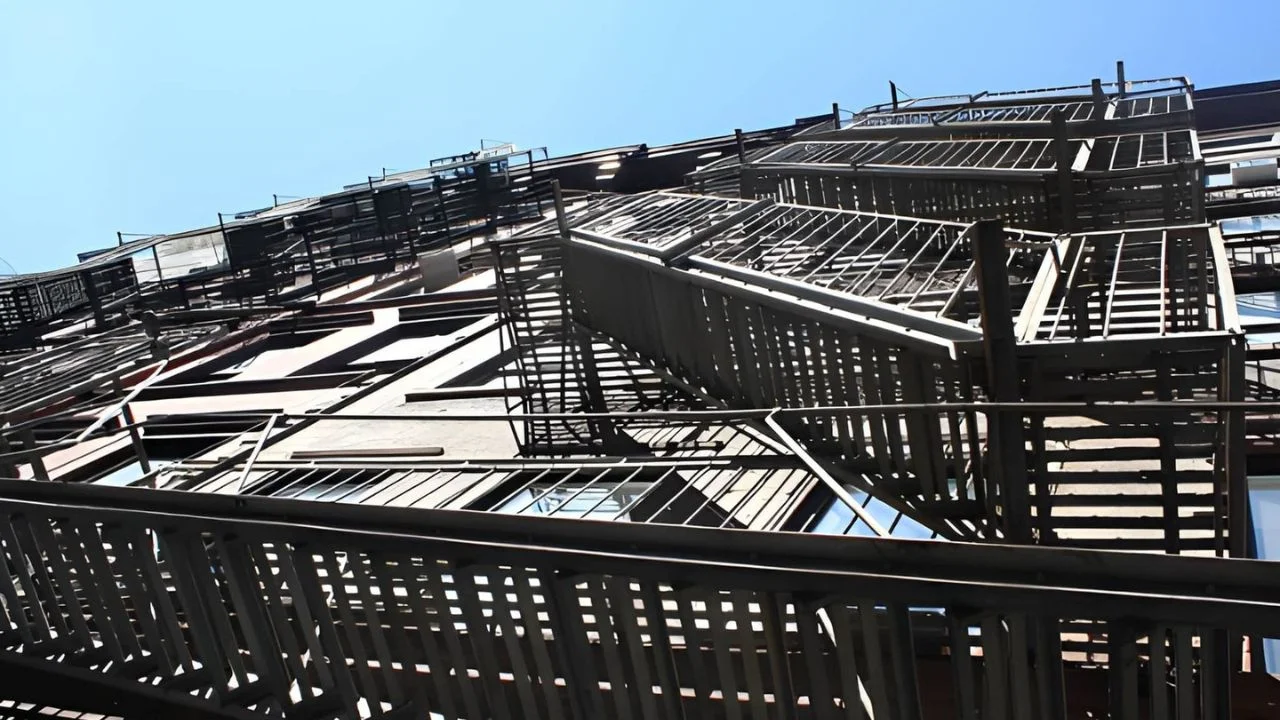
When an exterior steel assembly has moved beyond peeling paint or one isolated repair, another patch may not be the answer. We restore heavily deteriorated structures by identifying what can safely remain, replacing what cannot, and rebuilding the system around its actual condition.
New Jersey experiences an average of 60 to 80 freeze-thaw cycles per year. Water gets trapped behind the old layers of paint on your ironwork, freezes, expands, and snaps brittle, 80-year-old structural welds.
The difference usually becomes clear when deterioration stops being isolated. Look for:
A useful distinction matters here. New Jersey’s Rehabilitation Subcode specifically distinguishes categories including repair, renovation, alteration, and reconstruction. NJ DCA defines repair as restoring deteriorated components to sound condition, while more extensive work can fall into different regulatory categories depending on its nature and extent.
We document visible deterioration, connections, coatings, drainage and access conditions and identify areas requiring closer investigation.
Where structural design, calculations, connection details or other professional determinations are required, the work is coordinated with the appropriate licensed professional.
Occupied buildings require planning around entrances, residents, pedestrians, vehicles and adjacent property. Scaffolds and other access systems are selected according to the site and work scope.
Once structural work is complete, deteriorated coatings and corrosion products are removed as appropriate. The exposed steel is prepared for a compatible primer and finish system selected for the actual environment.
Failed sections may be cropped, replaced or reinforced according to the approved scope. Connection work and welding are performed around the existing configuration rather than treating every property as a new installation.
We document completed work, repaired components, coating work and relevant project records so the owner has a useful maintenance history.
Structural rehabilitation is not simply a painting project. New Jersey’s Uniform Construction Code states that construction permits are required for work including repairing, renovating, altering and reconstructing structures, while ordinary maintenance is treated separately. The local enforcing agency processes permit applications and inspections.
Property owners often think a fire escape is secure because the exterior bolt looks solid. But inside older New Jersey brick masonry (built between 1880 and 1950), those brackets were secured using molten lead poured into the brick cavity. Over decades, sulfur dioxide in urban NJ air reacts with the moisture in the brick, corroding the iron inside the wall where you can’t see it. The anchor can completely shear off while looking perfectly fine from the outside.

Approach | When it makes sense |
The steel remains sound, but the protective coating has failed. | |
Deterioration is localized and can be corrected without rebuilding the wider assembly. | |
Multiple components require coordinated structural rehabilitation while usable portions can still be retained. | |
Replacement | The existing structure is too extensively deteriorated or unsuitable to justify continued rehabilitation. |
Older properties often contain details worth preserving: original rails, connection arrangements, steel profiles and architectural proportions.
That does not mean retaining unsafe material simply because it is old. It means distinguishing between components that can remain serviceable and those that require replacement.
In older urban districts, we also consider the surrounding masonry, access limitations and any applicable local historic-preservation requirements before work begins.
A useful project record can include:
We provide services throughout key New Jersey communities, including:
Repair addresses specific damaged sections of an otherwise sound structure. Restoration is a more comprehensive rebuild for structures with widespread deterioration, replacing failed steel components while retaining and rebuilding the original structure where safely possible.
Signs include rust and corrosion across multiple sections rather than one isolated area, decades of age with little or no major maintenance, or an inspection failure caused by extensive deterioration. Our on-site assessment helps determine the appropriate scope of work.
Cost varies based on the extent of deterioration, the number of steel components requiring replacement, the building height, access conditions, and the complexity of the work. We provide a free on-site assessment and detailed quote.
Yes. We work on older and historic properties throughout New Jersey, carefully addressing structural deterioration while taking the building's existing character and site requirements into consideration.
A comprehensive project typically takes longer than a localized repair. Many projects take approximately one to two weeks. Still, the actual schedule depends on the extent of structural work, number of levels, site access, permitting or inspection requirements, and weather conditions.
Often, yes. Rebuilding can preserve usable portions of the existing structure instead of replacing everything from scratch. However, the cost comparison depends on the condition of the existing steel and how much can safely be retained.
Yes. We coordinate projects across multi-building portfolios for landlords and property managers throughout New Jersey, helping organize assessments, repair work, scheduling, and project coordination across multiple properties.
